

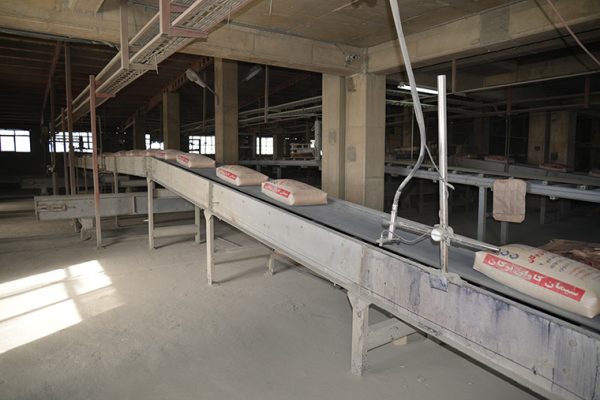

Composite Portland Cement
This type of cement is produced according to Iranian National Standard No. 1-17518 as a modified Portland cement and is recognized for its high resistance to sulfate attack.
Therefore, it is used in cases where concrete may be threatened by sulfation. Its special application is in concretes requiring moderate heat of hydration.
Boukan Cement Plant, after producing 525-1, 425-1, Type II, and Portland Pozzolana cements, has also started producing Composite Portland Cement to meet domestic customer needs.
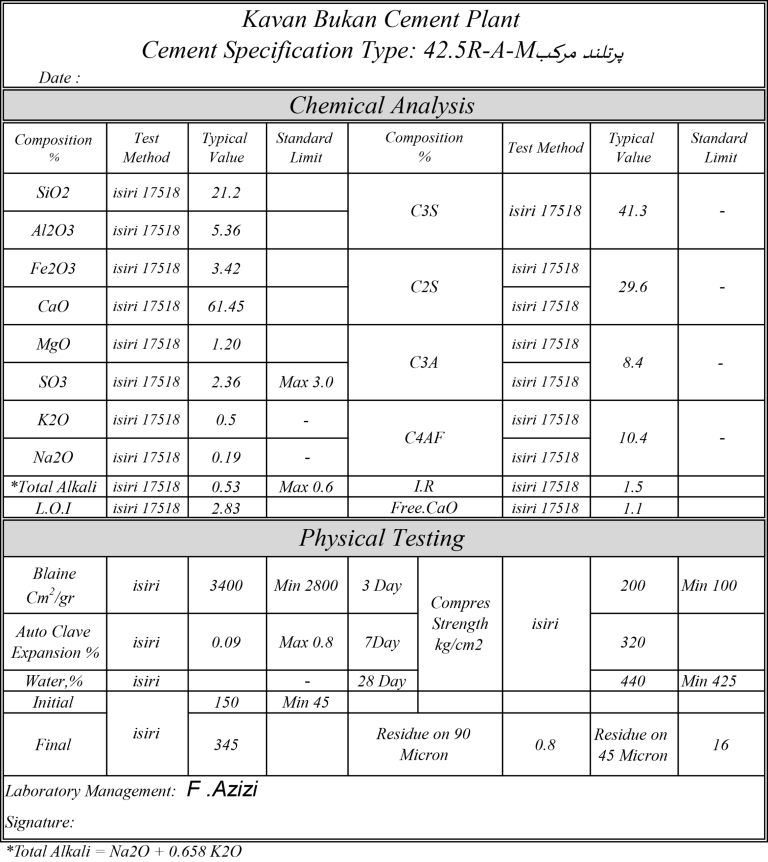
This cement meets Iranian National Standard 1-17518 and European standard EN 197-1.
With access to high-quality raw material mines and advanced, precise machinery, the plant is capable of producing clinker and composite Portland cement according to customer requirements.
The composite cement produced by Boukan, due to the presence of pozzolan and high-quality lime in its composition, offers the following advantages in use:
Key Features of Composite Portland Cement
- Suitable for corrosive and humid environments, in contact with groundwater and running water.
- High resistance to sulfate attack, suitable for concrete pipes, water, and sewage channels.
- Suitable for foundations of marine structures and highly corrosive environments.
- 28-day compressive strength of 440 ± 20 kg/cm².
- Enhances concrete strength.
- Cost-effective and economical.
- Due to the presence of microsilica, penetrates capillary pores, creating dense, impermeable concrete.
- Resistant to freezing and cold conditions.
- Pozzolan reduces heat of hydration in cement.
- Minimizes surface cracking due to excellent physical and chemical properties.
- Using Portland Pozzolana cement significantly reduces concrete volume during pouring.
- Protects construction materials and reinforcing steel in concrete from corrosive substances.